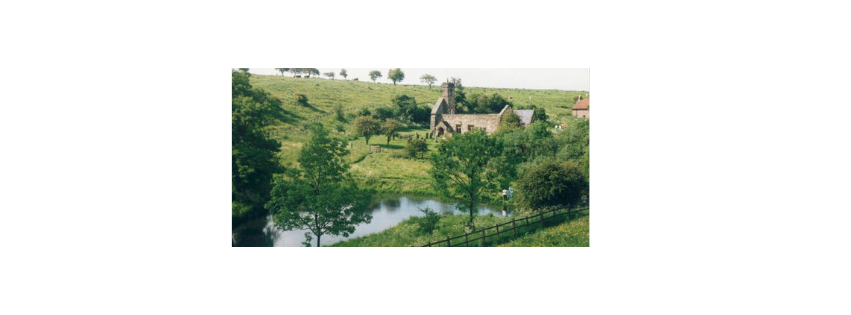
The Village That Vanished
Hidden among the wolds of Yorkshire lies the medieval village of Wharram Percy. Today, only the ruins of St Martin’s Church stand tall above the grass-covered remains of homes, workshops, and farm buildings that once formed a thriving community.
I have visited the village several times; it’s very tucked away, atmospheric and seems to hold many secrets. However, beneath the soil, archaeologists uncovered evidence suggesting that some medieval villagers feared certain members of their community might return after death.
Their discoveries would become one of the most intriguing and unsettling finds in British archaeology.
A Settlement Older Than It First Appears
The archaeological remains belong largely to the medieval period,
Although the visible remains belong largely to the medieval period, evidence suggests people were living in the valley long before the Norman Conquest.
Archaeological investigations have uncovered traces of Anglo-Saxon occupation dating back to around the 9th or 10th century. Following the Norman invasion, the village became associated with the powerful Percy family, whose name it still carries today.
For centuries, Wharram Percy flourished as an agricultural settlement, with farmers raising livestock and cultivating crops on the surrounding land.
Life in Medieval Wharram Percy
During its height in the 12th and 13th centuries, the village was thriving; it contained around forty peasant households, manor houses, barns, workshops, and a church that served as the centre of the community.
As in many medieval villages, daily life revolved around the seasons. Families worked the land, tended livestock, and paid rents to the landlords.
Many of the archaeological digs have revealed pottery, tools, animal bones, and household items that give us a tiny glimpse into the lives of ordinary medieval people who would otherwise have been forgotten to history.
St Martin’s Church
The most visible reminder of Wharram Percy’s past is St Martin’s Church. It shows evidence of several phases of construction; it is possible that some parts date back to the 10th century. The church that survives today is largely Norman in character, though it underwent numerous alterations during the following centuries. Even after much of the village had begun to decline, the church continued to serve the surrounding area.
Why Was the Village Abandoned?
The disappearance of Wharram Percy was not the result of a single disaster; instead, it was a series of events combined over many generations.
During its peak, in the 12th and 13th centuries, there were roughly 40 households. It doesn’t sound like a lot, but it is estimated that there would have been between 180 and 220 people in the village.
The village dealt its first major blow during the Black Death, which reached England in 1348. The plague is estimated to have killed 30 to 50 per cent of England’s population. There are no records that tell us exactly how many people died at Wharram Percy; manorial records and archaeological evidence suggest the village never fully recovered. Fewer tenants were recorded, some house plots fell vacant, and parts of the settlement were abandoned.
By the 15th century, the number of occupied households had dwindled to around 20-25, roughly half the village’s former size. The decline in the population affected agriculture, as farming became increasingly difficult to sustain. Some fields were abandoned.
It was during this time that the English wool trade started to flourish. Now, on the face of it, this sounds positive, but sheep farming required fewer workers than growing crops, which at the end of the day made it much more profitable for the wealthy landowners. Rather than allow farming families to rent the land, they could earn higher income by converting large areas of land into sheep pastures.
Records show that around 1508, the last remaining tenants were removed from Wharram Percy as more land was enclosed for sheep grazing. By the 1520s, the village had been completely abandoned.
The Discovery That Changed Everything
During archaeological excavations in the 1960s, researchers uncovered something unexpected.
In a pit away from the churchyard were the remains of several individuals whose bodies had been treated very differently from normal Christian burials.
The bones showed evidence of burning, decapitation, and deliberate dismemberment after death.
For decades, scholars debated the meaning of these remains.
Fear of the Restless Dead
One interpretation links the discoveries to medieval beliefs surrounding fear of the restless dead.
We are not talking vampires here; instead, medieval people believed that some individuals could return from the grave to harm the living.
Many recorded stories across medieval England describe corpses rising from their tombs, spreading disease, attacking relatives, or bringing misfortune to their communities. According to these beliefs, a dangerous corpse could be prevented from returning by burning, mutilating, or otherwise destroying the body.
The remains found at Wharram Percy bear striking similarities to these practices.
Now, I fell into a bit of a rabbit hole here, because I was thinking: how did they who was going to come back from the dead? I could actiually right a whole blog post on just this, and maybe I will one day, but for now I will keep it brief! Those viewed with suspicion often included people who had died suddenly or violently, those who had taken their own lives, individuals believed to have lived sinful or immoral lives, and those who had died without receiving the Church’s last rites. In some accounts, people who held deep grudges or unresolved conflicts were also thought more likely
Archaeologists cannot prove beyond doubt that this is the explanation for burning, decapitation, and deliberate dismemberment of bodies after death. Many do agree that the bones provide rare evidence of medieval fears around the undead.
Folklore, Belief, and Reality
Its mystery comes not from modern paranormal stories but from the beliefs of the people who once lived there.
The archaeological evidence suggests that beneath the routine rhythms of medieval life existed a world filled with spiritual concerns, fears of improper burial, and anxieties about what might happen after death.
When I visit Wharram Percy, I can’t help thinking it holds more secrets, and who knows, one day it may be ready to share some of them.

This is just a collection of books and tools I genuinely use or return to.

For tools for your craft and personal path, visit The Psychic Tree. Use
my code HEDGEWITCHJOURNALSBLOG for 10% off.
2 responses to “Wharram Percy: A Deserted Medieval Village and the Fear of the Restless Dead”
Brilliant👏👏👏I really enjoyed reading this💕
Thank you so much. This really means a lot to me.