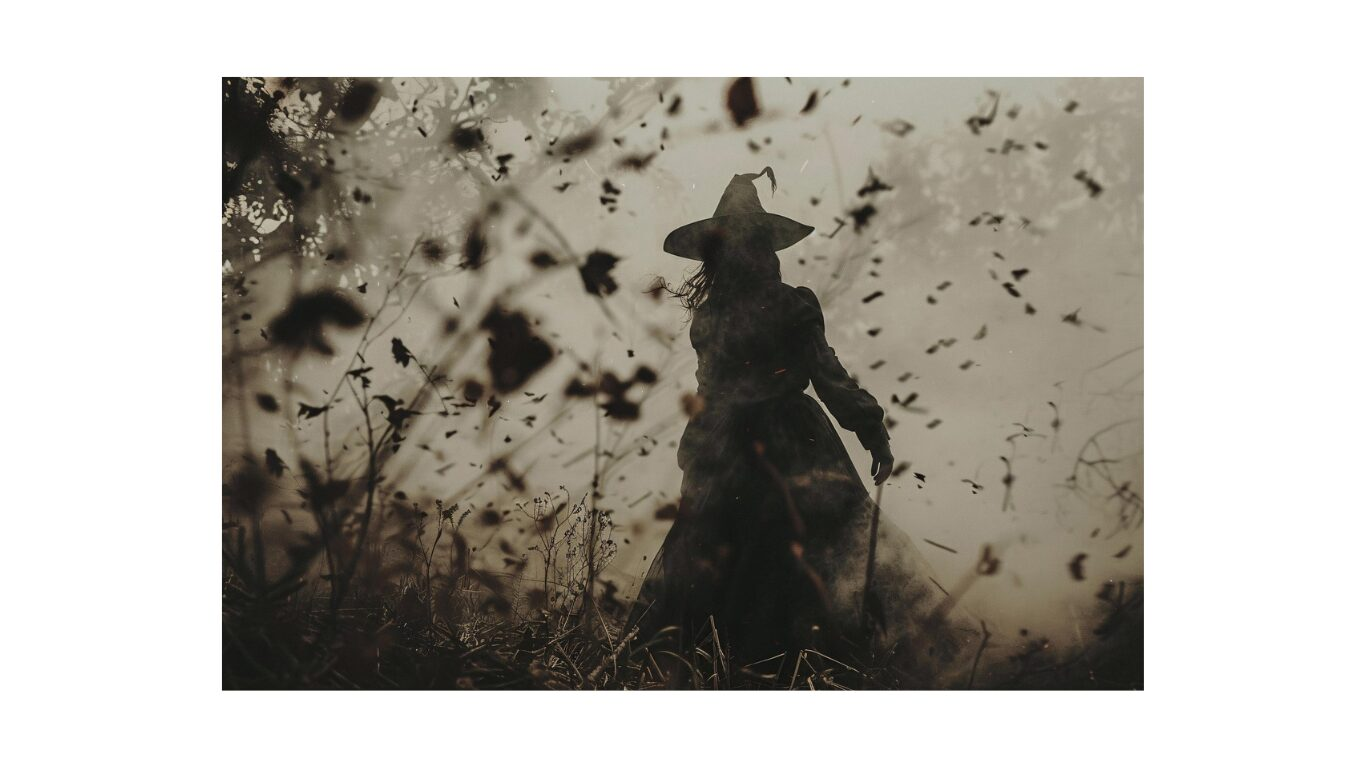

Hedgewitchcraft is one of the hardest paths to explain, partly because it refuses to be neatly defined.
Ask several hedge witches what a hedge witch is, and you will get several different answers! It was the author Rae Beth who brought the term hedgewitch to oir modern eyse, with her book Hedgewitch: A Guide to Solitary Witchcraft. I really do recommend her books, you will find them listed below. The word ‘hedge’ has much older origins and was used to describe the boundary between this world and the otherworlds.
To put it as simply as I can, a hedge witch works with the liminal. It’s a practice that is rooted in connection with otherworlds and the ability to move awareness through liminal space, where the seen and unseen interact.

A solitary craft
A hedgewitch is not part of a coven or group; they are usually solitary. This doesn’t mean they don’t occasionally get together with others. They do not usually follow any set rules or guidelines. Which suits me just fine, thank you!
Some hedgewitches choose to work with gods and goddesses, while others prefer to walk their path without them.
When it comes to spellcasting, hedgewitches do not have a strict set of tools they use. I do not do a lot of spell work, but if I do, I have a small toolkit which includes candles, my trusty cauldron, the herbs I grow, and my crystal ball. I also have a ridiculous collection of journals: one for general scribbling, which I do a lot of, one or two for writing things like herb notes and card meanings, and one for dreams and dreamwork.
A hedgewitch may incorporate other crafts into their practice, such as green witchcraft or kitchen witchcraft. Personally, I lean heavily towards green witchcraft, and working with the natural world has always been at the heart of what I do.
All of these things can sit alongside the main focus of hedgewitchcraft, which is working between worlds,the liminal. For a hedgewitch, this is known as hedge riding.
What is hedge-riding?

Hedgeriding is the journey a hedgewitch takes into otherworlds. To take these journeys, a hedgewitch may use practices such as mild trance and deep meditation.
Things can get very confusing when it comes to what the otherworlds look like, it really does depend on which path/belief you choose to follow.
It is best to read up on hedgeriding as much as you can before you practice. Trust me, it is no good following someone else’s practice if it doesn’t feel right for you, or it just makes no sense to you. I have listed a few books below that I have found helpful.
I have been practising hedgewitch craft for a long time, but I am still learning and building on my practice. When it came to hedgeriding, it took me a while to find ways that suited me. The best advice I can give you is to work on the meditation and visualisation side of things first. Then perhaps move on to practising being in the semi-conscious state ( the state you are in when you are half asleep and half awake. This is a good practice for hedgeriding as it gets you used to being in the in-between.
Always take it slowly; you do not need to be hedgeriding within a week. You would not get in a car and drive down a motorway if you couldn’t drive, so don’t try and hedgeride without knowing what you are doing first. Learn the basics, understand them, then practice. You will continually build on that; hedgewitchcraft, indeed any witchcraft practice, is a lifelong journey; you don’t stop learning.
MY Path
For me, hedgewitchcraft is as much about the nature around me as it is about crossing into the otherworlds. I enjoy tending to my garden at home, where I grow herbs and flowers. I love to be outdoors in nature. I hike whenever I can. I have learnt to hedge-ride while walking; at the moment, there is only one route I can actually do it on. The particular route is very familiar to me. But trust me, it didn’t happen overnight!
Divination has always been a big part of my practice. I tend to use tarot and oracle cards.
Most of my craft is working with the spirits of this world, the land, and the unseen realms.
Sometimes I keep an altar table, especially during seasons like Samhain, but more often than not, I end up at the hearth in front of the log burner if I need to do a ritual.
Folklore weaves into my practice, too, as well as folk magic
If you feel drawn to hedgewitchcraft, trust that pull. Take your time, study properly, and let your practice grow slowly. The best hedgewitchcraft is built over years, not days.

For tools for your craft and personal path, visit The Psychic Tree. Use my code HEDGEWITCHJOURNALSBLOG for 10% off.

Hedgewitch craft books.
There are not a lot of books on hedgewitchcraft, but there are new ones coming out all the time. Here are a few I have read.

Pagan Portals: Hedge Witchcraft by Harmonia Saille.
A good place to start. It contains lots of information but not too much to take in.
Hedge riding by Harmonia Sailles

Harmonia Sailles book on hedgeriding: A straightforward guide.

The Path of the Hedgewitch by Joanna van der Hoeven
Rae Beth coined the term hedgewitch. So her books are a must. I have linked others below.
Hedge Witch: A Guide to Solitary Witchcraft by Rae Beth
The Hedge Witch’s Way: Magical Spirituality for the Lone Spellcaster by Rae Beth
The Green Hedge Witch: 2nd Edition by Rae Beth
This website may contain affiliate links. This means I may earn a small commission if you choose to make a purchase through them, at no extra cost to you.