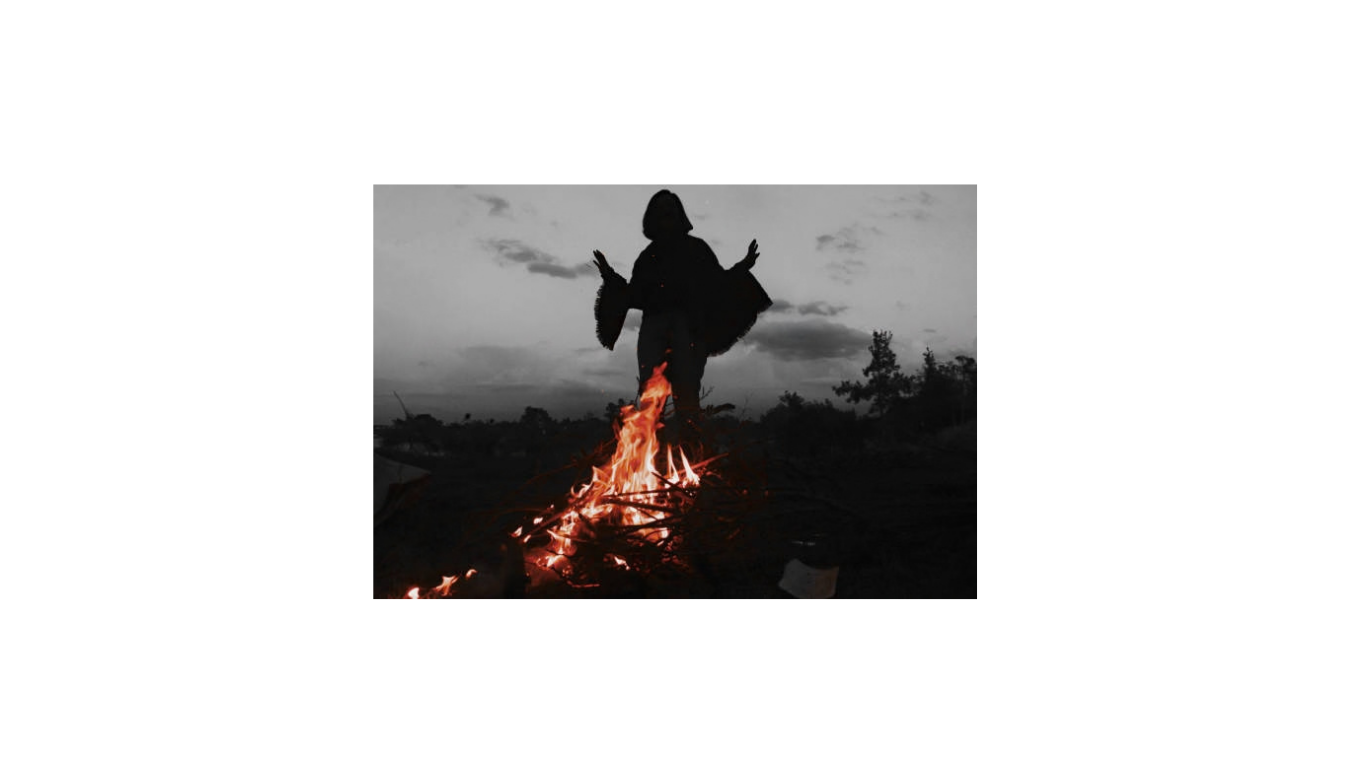
The bright warmth of summer and the cold dark of winter never touched the Celtic people gently. They lived by the rhythm of the land; the boundary between summer and winter was sudden. At no other point in the year did life seem so fragile.
During this time, a flurry of activity took place; the final harvest was gathered and stored. Survival depended on this harvest; a bad crop could cause many problems or even death.
Livestock were brought closer to home; no longer would they have the freedom they had during the summer months
The air sharpened, the light softened, and the days drew short. Nights stretched long and heavy. For the Celtic peoples of Britain and Ireland, this was more than a change of weather; it was a turning point: a passage into the dark half of the year, when death became life’s central theme. Everyone felt the shift. Unlike today, when the seasons slip by unnoticed for some, this was a matter of hunger or plenty, survival or loss.
The Festival of Summer’s End
Samhain was one of the four great fire festivals of the Celtic calendar, alongside Imbolc, Beltane, and Lughnasadh. Where Beltane welcomed the light and fertility of summer, Samhain marked its opposite, the dying of the year, the descent into cold and uncertainty. Across the Celtic lands, similar rhythms were observed: in Wales, for example, Calan Mai mirrored Beltane, celebrating the arrival of summer and the flourishing of life, while Calan Gaeaf marked the first day of winter and the end of the harvest, echoing the themes of Samhain.
The Otherworld Draws Near
Samhain was understood as a time when the veil between this world and the Otherworld grew thin. The dead could cross over, and so could the fairy folk, who were feared as much as they were honoured. These were not the playful sprites that were so loved by the Victorians, but powerful, unpredictable beings. They could bless or curse, protect or destroy.
Families set out offerings of food and drink for departed loved ones, hoping to win their goodwill. An empty place might be left at the hearth or the table for departed ancestors. At the same time, disguises of animal skins, masks, and ragged costumes were worn to confuse or frighten away anything negative that might slip across with the good spirits.
With the boundary between worlds blurred, it was believed to be easier to glimpse what lay ahead. Rituals involving apples, nuts, mirrors, or firelight were used to foretell marriage, fortune, or even death. In this way, Samhain was both fearful and hopeful.
English Folklore and the Dead of Autumn
Though Samhain is most often spoken of in Irish and Scottish contexts, echoes of it resonate across English folklore too, especially once Christianity took root. In medieval England, the nights around the end of October were bound up with death, spirits, and ritual remembrance.
One practice was souling. On All Hallows’ Eve and All Souls’ Day, the poor would go from door to door singing or praying for the souls of the departed, receiving in return “soul cakes”, small spiced breads.
Masks and disguises appear in English tradition, too. “Mumming”, costumed processions and performances were common in late autumn and winter. It was similar to what our early ancestors did; the aim was to trick spirits with a disguise.
Welsh’s version of Samhain – Calan Gaeaf
The Welsh version of Samhain is called Calan Gaeaf, with the night before known as Nos Galan Gaeaf or Winter’s Eve. It is also referred to as Ysbrydnos, “Spirit Night.” Like the Celtic Samhain, Calan Gaeaf marked the first day of winter and the end of the harvest season, a liminal threshold when the veil between the living and the dead was thin. Traditions mirrored those of the other Celtic lands; hearths were honoured, offerings were made, and communities remained vigilant against spirits that roamed the night.
One famous figure of Welsh folklore associated with this night is the Tail-less Black Sow(Yr Hwch Ddu Gwta ). The spectral being was said to roam on Nos Galan Gaeaf. This fearsome creature was believed to chase or capture the last person lingering near dying bonfires, serving as both a warning and a chilling story to ensure people returned home before nightfall. A good way to get children to bed, I guess, but it sounds pretty scary to me. I would love to learn more about this tale’s origins.
Gods and Goddesses of Samhain
We cannot be certain which gods or goddesses the Celts specifically honoured at Samhain, or even if they did at all. We know that several figures from mythology are closely linked to this liminal season, embodying death, transformation, and the cycles of life. Some are mentioned in texts in connection with the festival, while others, such as Cerridwen, are often associated with it in modern practices.
Samhain Today
For many modern pagans, witches, and folklorists, Samhain has been reclaimed not only as a historical festival but as a living practice. It remains a time to honour ancestors, to reflect on mortality, and to recognise the cyclical nature of life and death. For those walking a spiritual path close to the old ways, Samhain is not just Halloween’s shadow; it is a moment when the world still feels split, and the old stories stir in the cold air.

I highly recommend the Pagan Portals books. Take a look here
Celtic Cauldron: Rituals for self-care and manifestation Hardcover, by Nicola McIntosh
For tools for your craft and personal path, visit The Psychic Tree. Use code HEDGEWITCHJOURNALSBLOG for 10% off.

Leave a Reply